## Introduction
Selecting the right commercial vacuum packaging machine is one of the most consequential equipment decisions a food processor, distributor, or packaging operation will make. The wrong choice means wasted budget, production bottlenecks, inconsistent seal quality, and ultimately, product loss.
Yet with so many machine types, specifications, and manufacturers flooding the market in 2026, the buying process has never been more complex — or more consequential.
Based on our 19 years of experience supplying industrial vacuum packaging equipment to businesses in over 100 countries, KBT Packaging has distilled the procurement process into six non-negotiable factors every B2B buyer must evaluate before signing a purchase order.
—
## 1. Understand Your Chamber Size Requirements
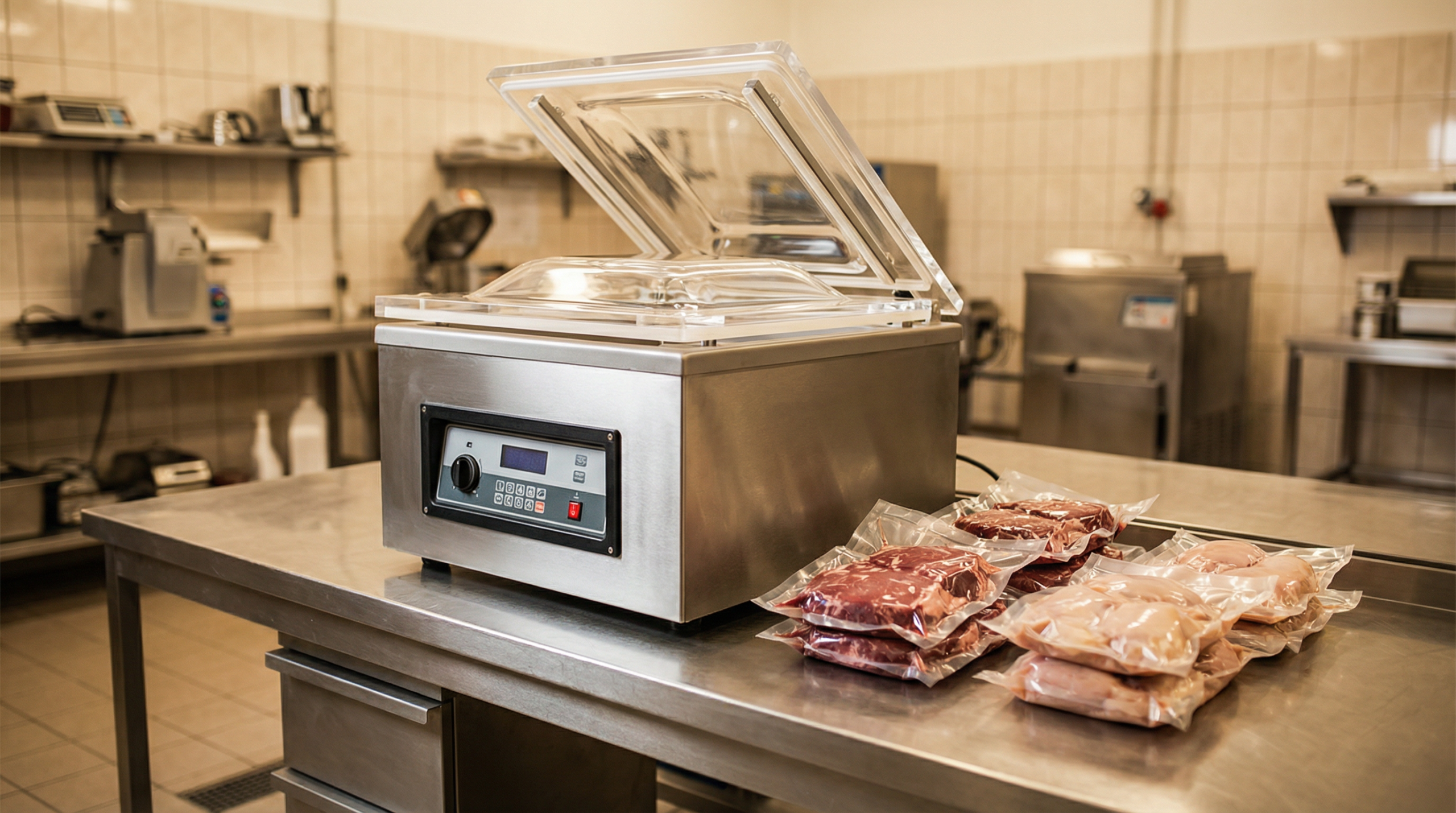
Chamber size determines what you can physically package — and how efficiently your line runs.
Key questions to ask:
- What is the maximum bag size I need to seal?
- Will I be packaging bulk items (whole muscles, sides of beef) or individual retail portions?
- How many units per cycle do I need to hit my throughput targets?
2026 Industry Context: Single-chamber machines remain the workhorse for operations processing 50–200 units per hour. Double-chamber configurations have gained significant traction in mid-to-large-scale facilities aiming for 300–600 cycles per hour, particularly in the North American and European meat processing sectors.
For businesses scaling beyond 500 units/hour, thermoforming packaging machines offer a fully automated alternative that integrates forming, filling, and sealing in a single continuous line.
Pro tip from KBT technicians: Always choose a chamber at least 15% larger than your largest anticipated bag dimension. This prevents bag cramming, which is the leading cause of failed seals in commercial operations.
—
## 2. Match the Vacuum Pump Capacity to Your Product Type
The vacuum pump is the heart of any machine — and mismatched pump capacity is the most common cause of buyer regret.
Pump sizing by product category:
| Product Type | Recommended Vacuum Level | Pump Capacity |
|—|—|—|
| Fresh meat & poultry | 95–99% (2–8 mbar) | 63–160 m³/h |
| Hard cheese & cured meats | 98–99.5% (1–5 mbar) | 100–250 m³/h |
| Seafood (whole fish) | 95–98% (5–15 mbar) | 63–160 m³/h |
| Dry goods & powders | 99.9%+ (<1 mbar) | 200+ m³/h |
| Prepared meals (with headspace) | 90–95% (15–30 mbar) | 40–63 m³/h |Why this matters in 2026: With global food waste reduction targets driving stricter cold chain requirements, regulatory bodies in the EU and North America are tightening guidelines on vacuum packaging oxygen residual limits. A machine that cannot achieve the required vacuum level for your specific product category may put your compliance status at risk.
KBT Packaging sources Busch, Rietschle, and Leybold pump assemblies for our commercial-grade machines, each selected to meet the specific demands of the food categories our clients serve.
—
## 3. Evaluate Seal Bar Quality and Durability
The seal is your product’s final line of defense against contamination, moisture ingress, and microbial spoilage. In a B2B context, a failed seal is not merely a packaging defect — it is a food safety incident.
What to scrutinize:
- Seal bar material: Ceramic-coated seal bars have emerged as the 2026 standard for food-grade applications, offering superior heat resistance and longevity compared to traditional Teflon-coated bars. They resist adhesive buildup from fat and moisture.
- Seal width: Standard seal bars offer 3–5mm wide seals. For high-stress applications (bone-in cuts, irregular geometry), demand 8–10mm wide impulse seals.
- Dual seal vs. single seal: Double seal bars provide a backup seal. For high-value products (premium beef, specialty seafood), this redundancy is a sound investment.
- Cut-off knife quality: A sharp, properly tensioned cut-off knife ensures clean bag separation without tearing. Dull knives cause bag neck stretching, compromising seal integrity on the next cycle.
—
## 4. Assess Control System Sophistication
The control interface is where operator error most frequently occurs — and where the greatest productivity gains (or losses) are realized.
2026 benchmark features:
- Programmable memory: Minimum 10-product program storage with one-touch recall. This eliminates re-setting between product changeovers — a significant time saver in multi-SKU operations.
- Vacuum-to-seal precision control: The ability to set an exact final vacuum level (in mbar) rather than relying on cycle time alone. This ensures consistent results across product batches with varying moisture content.
- Soft air inflation: Controlled atmospheric re-pressurization after sealing prevents package collapse and liquid purge, especially critical for delicate products like fish fillets.
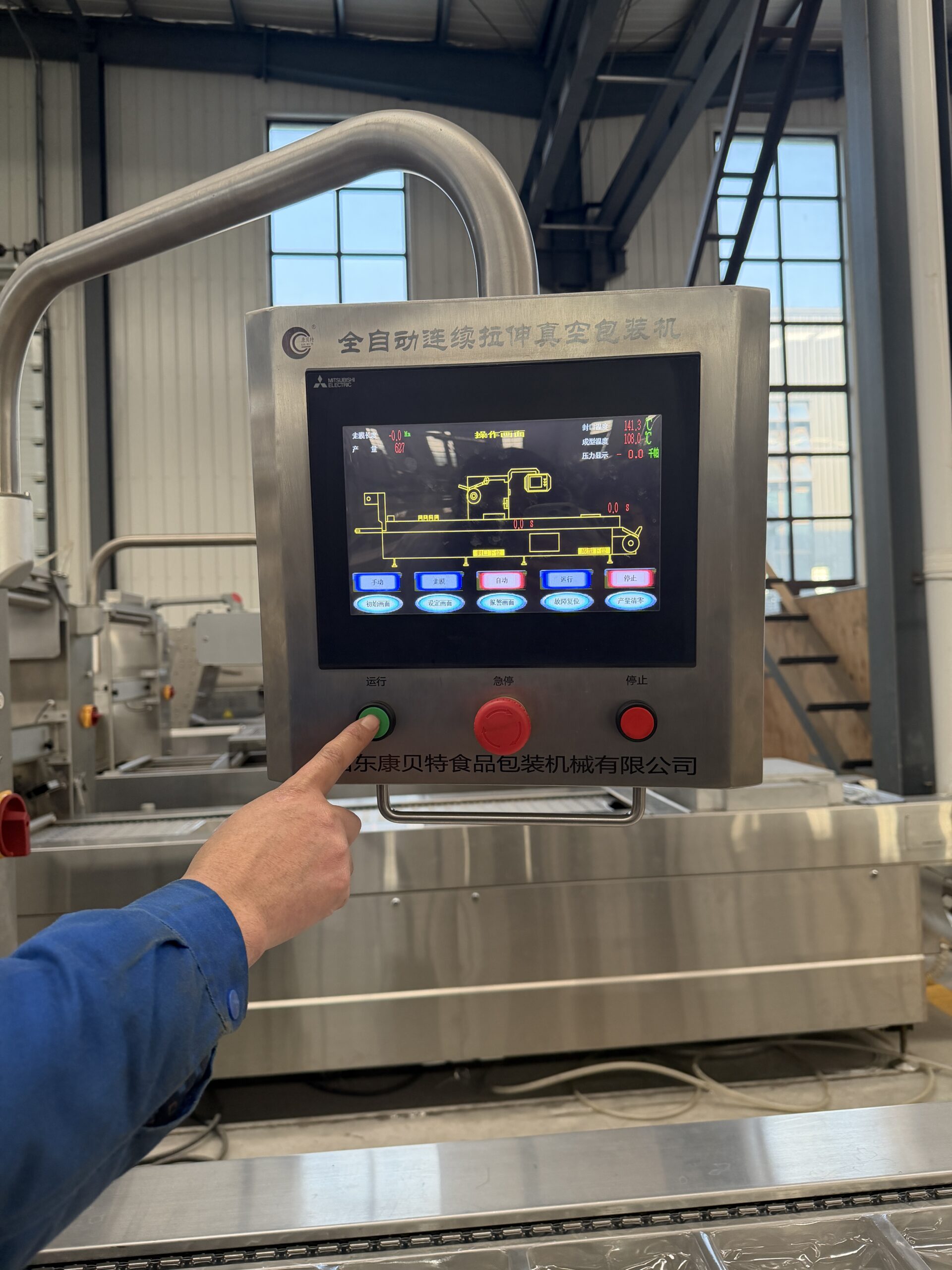
- Diagnostic displays: Real-time vacuum level readout, cycle counter, and fault code display reduce maintenance troubleshooting time and support predictive service scheduling.
Operators at facilities in the Netherlands, Singapore, and the UAE consistently cite control system usability as their top-rated satisfaction factor.
—
## 5. Calculate Total Cost of Ownership, Not Just Purchase Price
A machine’s sticker price accounts for as little as 40% of its total lifecycle cost. This blind spot trips up even experienced procurement professionals.
Cost categories to model:
- Energy consumption: Single-chamber machines typically draw 1.5–3 kW/hour. Double-chamber configurations may reach 5–8 kW/hour. At USD 0.12/kWh (average North American industrial rate), energy can add USD 3,000–7,000 annually to operating costs.
- Consumables: Seal bars require replacement every 12–24 months depending on usage (USD 150–400 per bar). Oil-flooded vacuum pumps require oil changes every 500–1,000 operating hours (USD 80–200 per service).
- Downtime cost: For a meat processor running 2 production lines at USD 500/hour throughput, a single day of unplanned downtime costs more than the annual maintenance budget of the machine itself.
- Service and parts: Verify the manufacturer’s parts availability for your region. Some brands have lead times of 8–16 weeks for critical pump components — an unacceptable risk for a 24/7 operation.
Industry data point: According to 2025 market analysis from Grand View Research, the total cost of ownership for a commercial-grade vacuum packaging machine over a 7-year lifecycle averages 2.4× the initial purchase price.
—
## 6. Verify Compliance with Target Market Regulations
If you are exporting or supplying into regulated markets, machine certification is not optional — it is a prerequisite for market access.
Key certifications to demand from your supplier:
| Market | Applicable Standard | What It Covers |
|—|—|—|
| USA | FDA 21 CFR Part 110, USDA FSIS | Food contact surfaces, sanitation design |
| European Union | CE Marking (EN 12830, EN 13418) | Safety, temperature logging, vacuum accuracy |
| United Kingdom | UKCA Marking | Equivalent to CE, post-Brexit requirement |
| Australia/New Zealand | FSANZ | Food safety and hygiene design |
| General / Export | ISO 9001:2015 (manufacturer) | Quality management system |
2026 regulatory development: The EU’s revised Food Information to Consumers Regulation (FIR) and updated packaging material regulations (EU 2019/1381) now impose stricter documentation requirements for vacuum packaging process validation. Buyers should confirm their supplier can provide calibration certificates, material safety data sheets for food contact components, and process validation documentation.
KBT Packaging operates under ISO 9001:2015 certified quality management and provides full documentation packages — including CE/UKCA declarations, food contact material declarations, and operation manuals in English — as standard for all B2B export orders.
—
## Bonus: 5 Questions to Ask Any Supplier Before Buying
Before committing to a purchase order, ask your supplier these five questions:
- What is your average spare parts delivery time to my country?
- Can I get a reference from a client in my specific industry (meat, seafood, dairy)?
- Do you provide on-site installation and operator training, or is it remote only?
- What is your warranty structure, and what does it explicitly exclude?
- Can I run a sample production trial before finalizing the order?
A confident, experienced supplier will welcome all of these questions. Hesitation on any of them is a meaningful signal.
—
## Conclusion
Choosing the right commercial vacuum packaging machine for your B2B operation is a multi-dimensional decision that extends far beyond pumping specifications and price tags. By systematically evaluating chamber size, pump capacity, seal quality, control systems, total cost of ownership, and regulatory compliance, you position your business to make an investment that pays dividends in food safety, operational efficiency, and brand reliability.
At KBT Packaging, our team of technical specialists works directly with B2B buyers in over 100 countries to identify the optimal machine configuration for each operation. Speak with our procurement team to begin your evaluation process.
—
Need help deciding between a chamber vacuum machine and a thermoforming packaging system? Our technical comparison guide walks through the decision framework in detail.
—
Published by KBT Packaging | March 20, 2026 | Technical Insights