
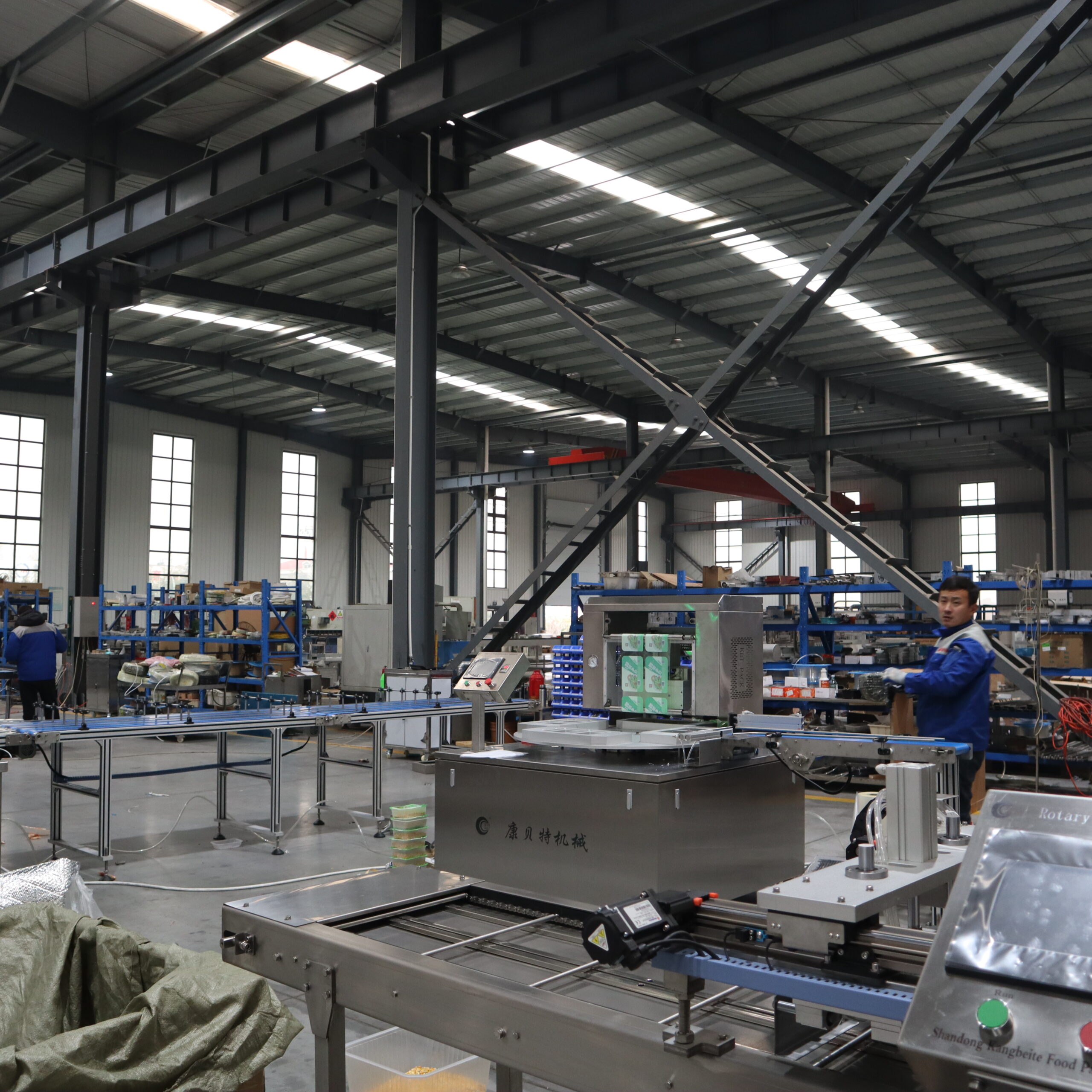
What Is Vacuum Packaging?
Vacuum packaging removes air from the package before sealing, creating a vacuum environment inside. The product is placed in a pouch or formed cavity, the air is extracted by a vacuum pump, and the package is hermetically sealed. No gas is added back — the package remains under negative pressure.
Key characteristics:
- Oxygen level after packaging: typically 0.1–0.5%
- Package conforms tightly to the product (skin-tight appearance)
- No gas mixture required — only a vacuum pump
- Lower packaging material cost (no gas flush, simpler films)
- Common applications: processed meats, cheese, bacon, jerky, nuts, dried goods, electronic components
At KBT, our chamber vacuum packaging machines and continuous belt vacuum sealers deliver deep vacuum levels using original Busch vacuum pumps (Germany), with SUS304 food-grade stainless steel construction for washdown environments.
What Is MAP (Modified Atmosphere Packaging)?
Modified Atmosphere Packaging (MAP) replaces the air inside the package with a precisely controlled gas mixture — typically a combination of carbon dioxide (CO₂), nitrogen (N₂), and sometimes oxygen (O₂). The package is flushed with the gas mixture before sealing, displacing the ambient air.
Common gas mixtures by product:
- Fresh red meat: 70–80% O₂ + 20–30% CO₂ (maintains bright red color)
- Poultry: 20–40% CO₂ + 60–80% N₂
- Seafood: 30–50% CO₂ + 50–70% N₂ (some species benefit from low O₂)
- Ready meals / cooked foods: 30–50% CO₂ + 50–70% N₂
- Cheese: 100% CO₂ or high CO₂ mixtures
Key characteristics:
- Oxygen level: controlled by gas mixture (can be 0% or up to 80% for red meat)
- Package retains its shape (pillow effect or rigid tray with headspace)
- Requires gas mixer and gas flush system in addition to vacuum pump
- Higher packaging material cost (gas, barrier films with specific transmission rates)
- Common applications: fresh meat, poultry, seafood, ready meals, salads, sandwiches, baked goods
Our KBT MAP tray sealers feature precision gas mixing systems with ±1% accuracy, quick-change tooling for multi-SKU operations, and compact footprints for easy line integration.
Head-to-Head Comparison
1. Shelf Life Extension
This is the factor most buyers ask about first — and the answer depends heavily on the product.
Vacuum packaging: By removing nearly all oxygen, vacuum packaging inhibits aerobic bacteria and oxidative rancidity. For processed and cured meats, vacuum packaging can extend shelf life from days to 3–6 weeks under refrigeration. For cheese, it can extend to 2–6 months. For dried goods and nuts, shelf life can reach 6–12 months.
MAP packaging: MAP extends shelf life through a combination of CO₂ (which inhibits bacterial growth) and N₂ (which displaces oxygen and prevents package collapse). For fresh red meat in high-O₂ MAP, shelf life is typically 7–14 days. For poultry in MAP, 10–21 days. For seafood, 5–10 days. For ready meals, 14–30 days.
Critical distinction: Vacuum packaging generally delivers longer absolute shelf life because it removes oxygen more completely. However, MAP can deliver better quality retention for products that suffer under vacuum compression. For fresh red meat, MAP with high oxygen actually outperforms vacuum on shelf life and color — vacuum-packed fresh red meat turns purple and has a shorter retail display life.
Verdict: For processed, cured, or dried products, vacuum wins on shelf life. For fresh red meat and delicate products, MAP may deliver better real-world shelf life because it preserves product quality.
2. Packaging Cost
Vacuum packaging: Lower cost across the board. No gas is consumed, films are simpler (standard barrier films work well), and equipment is less complex. Material cost per package is typically 20–40% lower than MAP for equivalent package sizes.
MAP packaging: Higher cost due to: (1) gas consumption — each package requires a gas flush, adding $0.01–$0.05 per package depending on volume and gas mixture; (2) more expensive films — MAP requires films with specific oxygen and CO₂ transmission rates tailored to the product; (3) higher equipment cost — gas mixers, gas flush systems, and gas analyzers add to the capital expense.
Verdict: If cost is the primary driver and your product tolerates vacuum, vacuum packaging is significantly cheaper. For products that require MAP, the gas cost is a necessary tradeoff for quality and shelf life.
3. Product Appearance & Quality
Vacuum packaging: The tight conforming seal gives products a compact, professional appearance — ideal for bacon, sliced meats, and cheese blocks. However, vacuum compression can damage delicate products: soft cheeses deform, fresh produce bruises, baked goods crush, and fresh red meat loses its bright red color (turning purple due to lack of oxygen). Juices and drips can be forced out of the product, affecting appearance.
MAP packaging: The gas-filled headspace protects the product from compression. Fresh red meat retains its bright red color (thanks to high O₂), salads stay crisp, baked goods maintain their shape, and ready meals look appetizing. The package has a full, pillow-like appearance that reads as “fresh” on the retail shelf.
Verdict: For delicate, fresh, or appearance-critical products, MAP is clearly superior. For firm, processed, or cured products where appearance is less critical, vacuum works well and looks professional.
4. Equipment Requirements
Vacuum packaging: Equipment is simpler and more affordable. A basic chamber vacuum sealer starts at $5,000–$15,000. High-speed continuous belt vacuum sealers and thermoforming vacuum machines range from $30,000–$150,000+. Maintenance focuses on the vacuum pump — oil changes, seal replacements, and periodic valve servicing.
MAP packaging: Equipment is more complex. A semi-automatic MAP tray sealer starts at $10,000–$25,000. Automatic inline MAP sealers with gas mixing range from $25,000–$90,000. Thermoforming MAP machines can exceed $150,000. Maintenance includes the vacuum pump, gas mixer calibration, gas flush nozzles, and gas analyzer verification.
Verdict: Vacuum equipment has lower upfront cost and simpler maintenance. MAP equipment requires more capital and more sophisticated maintenance, but delivers capabilities vacuum cannot.
5. Environmental & Sustainability Considerations
Vacuum packaging: Uses less material per package (thinner films work because no gas pressure needs to be contained) and no gas consumption. The tight package also reduces shipping volume — more packages fit per pallet, lowering transportation emissions.
MAP packaging: Requires slightly thicker films to contain gas pressure and maintain the modified atmosphere. Gas consumption (particularly CO₂, a greenhouse gas) adds to the environmental footprint. However, MAP’s longer shelf life for fresh products reduces food waste — which is often the largest environmental factor in food packaging.
Verdict: Vacuum has a marginally lower packaging footprint. MAP may have a lower total environmental impact when food waste reduction is factored in, especially for highly perishable products.
Shelf Life Comparison Table
| Product Category | Vacuum Packaging Shelf Life | MAP Packaging Shelf Life | Recommended Method |
|---|---|---|---|
| Fresh red meat (retail) | 3–5 days (purple color) | 7–14 days (bright red) | MAP (high O₂) |
| Processed / cured meats | 21–42 days | 14–30 days | Vacuum |
| Bacon / sliced deli | 30–60 days | 21–42 days | Vacuum |
| Poultry (fresh) | 5–7 days | 10–21 days | MAP |
| Seafood (fresh) | 3–5 days | 5–10 days | MAP |
| Cheese (hard) | 60–180 days | 30–90 days | Vacuum |
| Cheese (soft) | Deforms / poor quality | 21–45 days | MAP |
| Ready meals (cooked) | 14–21 days | 14–30 days | MAP |
| Salads / fresh produce | Bruises / poor quality | 5–10 days | MAP |
| Baked goods | Crushes / poor quality | 7–21 days | MAP |
| Nuts / dried goods | 180–365 days | 90–180 days | Vacuum |
| Medical devices | 1–5 years | Not typical | Vacuum |
Shelf life figures are indicative ranges under proper refrigeration (0–4°C for most fresh products). Actual results vary by product, initial microbial load, packaging material, and storage conditions.
Which Products Suit Each Method?
Choose vacuum packaging for:
- Processed and cured meats (sausages, bacon, ham, jerky)
- Hard and semi-hard cheeses (cheddar, parmesan, gouda)
- Nuts, seeds, and dried fruits
- Coffee beans and ground coffee
- Electronic components and medical devices (sterile barrier)
- Any product where compact packaging and lowest cost are priorities
- Products shipping long distances where package volume matters
Choose MAP packaging for:
- Fresh red meat (beef, pork, lamb) for retail display
- Fresh poultry and game birds
- Fresh seafood and fish
- Ready meals, meal kits, and cooked foods
- Fresh-cut produce, salads, and sandwiches
- Soft cheeses (brie, camembert, fresh mozzarella)
- Baked goods and patisserie
- Any product where appearance, texture, or color is critical
How to Choose: A Decision Framework
Ask yourself these five questions:
- What is your product’s oxygen sensitivity? Products that need oxygen to maintain color (fresh red meat) require MAP with high O₂. Products damaged by oxygen (cured meats, nuts, cheese) benefit most from vacuum.
- How delicate is your product? Soft, crumbly, or easily bruised products need the protective headspace of MAP. Firm, solid products tolerate vacuum compression well.
- What shelf life do you need? If you need 30+ days for a processed product, vacuum is usually best. If you need 7–14 days for a fresh product with good appearance, MAP is the answer.
- What is your packaging budget? Vacuum is 20–40% cheaper per package. If margins are tight and the product tolerates vacuum, it is the economical choice.
- Where will the product be sold? Retail display favors MAP’s full, fresh-looking packages and bright red meat color. Foodservice, export, and industrial distribution often favor vacuum’s compact size and longer shelf life.
The hybrid approach: Many food producers use both methods — vacuum for processed products and long-shelf-life items, MAP for fresh retail products. KBT manufactures both platforms, so you can standardize on one supplier for all your packaging needs.
KBT: Both Technologies Under One Roof
At KBT, we design and manufacture both vacuum packaging machines and MAP tray sealers in our 13,000 m² ISO 9001-certified facility in Shandong, China. With over 20 years of experience, 30+ patents, and installations in 100+ countries, we have the expertise to help you select the right platform — or both — for your product mix.
Our vacuum packaging lineup includes:
- Chamber vacuum packaging machines (single and double chamber)
- Continuous belt vacuum sealers (high-speed inline)
- Thermoforming vacuum packaging machines (rollstock FFS with multi-cavity tooling)
- Rolling vacuum packing machines (for large or heavy products)
- All models feature German Busch vacuum pumps, Japanese Mitsubishi PLC, and SUS304 food-grade stainless steel
Our MAP tray sealer lineup includes:
- Semi-automatic MAP tray sealers (tabletop and rotary models)
- Fully automatic inline MAP sealers (with denesters and conveyors)
- Precision gas mixing (±1% accuracy) with CO₂, N₂, and O₂ capability
- Quick-change sealing tools for multi-SKU operations
- Optional gas analyzer for real-time residual oxygen verification
If you are unsure which method fits your product, send us your product specifications, target shelf life, and required output. Our application engineers will recommend the right platform and gas mixture (if MAP) for your specific scenario — no obligation.
Conclusion
The MAP packaging vs vacuum packaging decision ultimately comes down to your product’s needs. Vacuum packaging delivers longer shelf life for oxygen-sensitive products, lower cost, and compact packaging — making it ideal for processed meats, cheese, nuts, and industrial goods. MAP packaging delivers better product appearance, color retention, and protection for delicate products — making it essential for fresh red meat, poultry, seafood, ready meals, and retail display.
Before you commit, run a shelf life trial with your actual product under both methods. The data will tell you what your product needs — and the KBT team is ready to help you run that trial.
Ready to find the right packaging method for your product? Request a free consultation today and receive a customized shelf life and cost comparison for your specific products.