
What Is a Thermoforming Packaging Machine?
A thermoforming packaging machine — also called a rollstock machine or form-fill-seal (FFS) machine — creates the package itself as part of the packaging process. A bottom web of rigid or flexible film is heated, formed into cavities (trays or pockets) by a mold, loaded with product, covered by a top film, and then sealed under vacuum or modified atmosphere (MAP) before being cut into individual packs.
Key characteristics:
- Uses two rolls of film (bottom forming web + top lidding web)
- Cavities are formed in-line by custom tooling
- Supports vacuum, MAP, and vacuum skin packaging (VSP) modes
- Typical output: 5–10 cycles per minute, with multiple cavities per cycle
- Common applications: fresh meat, seafood, poultry, cheese, ready meals, medical devices
At KBT, our DRZ Series thermoformer runs on a magnesium-aluminum alloy frame wrapped in SUS304 food-grade stainless steel, uses original Busch vacuum pumps (Germany) and a Mitsubishi PLC (Japan), and is compatible with both flexible films and rigid trays.
What Is a Tray Sealer?
A tray sealer (or tray sealing machine) takes pre-formed trays — usually made of APET, CPET, PP, or aluminum — loads them manually or automatically, and heat-seals a lidding film onto the tray flange. It does not form the tray; forming happens upstream, either by an in-line thermoformer or by a tray supplier.
Key characteristics:
- Uses pre-made trays + lidding film
- Tooling holds the tray during sealing (no forming mold)
- Supports MAP, vacuum, and skin-over-tray sealing
- Typical output: 6–30 trays per minute (depending on semi-automatic vs automatic)
- Common applications: ready meals, fresh produce, dips, sauces, baked goods, meal kits
Tray sealers are often the first automated packaging step for growing food brands because they require lower upfront investment and shorter tooling lead times.
Head-to-Head Comparison
1. Throughput & Speed
Thermoforming machine: A multi-cavity thermoformer can produce 30–120+ packs per minute because each cycle yields multiple units. For a 6-cavity mold running 8 cycles/minute, that is 48 packs/minute — and high-end machines can go far higher.
Tray sealer: Automatic inline tray sealers typically handle 15–60 trays/minute; semi-automatic rotary models handle 6–15 trays/minute. Speeds are constrained by tray denesting and loading, not by the sealing cycle itself.
Verdict: At high volumes with a stable pack format, thermoforming wins on throughput. For moderate volumes or frequent format changes, a tray sealer’s simpler changeover can be more productive in practice.
2. Packaging Material Costs
This is where the thermoformer delivers its biggest economic advantage.
Thermoforming machine: Rollstock bottom film is significantly cheaper per unit than pre-formed trays. Industry data consistently shows material cost savings of 20–40% compared to pre-made pouches or trays, because you are buying raw film rather than a formed, transported, and stored tray.
Tray sealer: Pre-formed trays carry a premium for forming, tooling amortization, shipping volume, and storage. CPET and aluminum trays are especially costly. However, tray sealers use less film per seal (only the lidding web), which partially offsets the tray cost.
Verdict: If you run more than ~500,000 packs per year of a given format, the thermoformer’s material savings usually pay back the higher machine cost within 12–24 months. Below that threshold, a tray sealer often has the lower TCO.
3. Format Flexibility & Changeover
Thermoforming machine: Changing pack size requires a full mold set change — forming die, sealing die, and cutting die. On modern machines with quick-release tooling and PLC recipe storage, a trained team can complete a changeover in 30–60 minutes. However, each format requires its own custom tooling, which costs $3,000–$15,000+ per set and has a 4–8 week lead time.
Tray sealer: Changing tray size typically only requires a sealing plate (tool) change and possibly a tray guide adjustment. Semi-automatic machines can swap formats in 10–15 minutes. Tooling is simpler and cheaper ($800–$3,500 per tray size).
Verdict: If your product mix changes daily or you run many SKUs at low volume, the tray sealer is far more agile. If you run a handful of high-volume formats, the thermoformer’s longer changeover is irrelevant.
4. Labor Requirements
Thermoforming machine: Once loaded with film and set to run, a thermoformer is largely autonomous. An operator monitors the line, loads product (if not fully automated), and performs quality checks. One operator can often tend a thermoformer plus downstream equipment.
Tray sealer: Semi-automatic tray sealers require an operator to manually denest trays, load product, place the tray into the sealing area, and remove sealed trays. This is labor-intensive — typically 1–2 operators per machine. Automatic tray sealers with denesters and conveyors reduce labor but cost significantly more.
Verdict: In high-labor-cost markets (North America, Western Europe), the thermoformer’s lower labor requirement is a major TCO advantage. In markets with lower labor costs, this gap narrows.
5. Footprint & Line Integration
Thermoforming machine: A full thermoformer is a long machine (often 4–8 meters) because it must accommodate forming, loading, sealing, and cutting stations in sequence. It is designed as the centerpiece of an automated packaging line and integrates naturally with infeeds, labelers, checkweighers, and cartoners.
Tray sealer: Tray sealers are compact — even automatic models fit in a 2–3 meter footprint. Semi-automatic models are tabletop or small-frame. They are easier to drop into an existing line or move between production rooms.
Verdict: If you are building a new automated line from scratch, the thermoformer is the natural core. If you are retrofitting an existing room or need portability, the tray sealer wins.
6. Total Cost of Ownership (5-Year Estimate)
| Cost Factor | Thermoforming Machine | Tray Sealer (Automatic) |
|---|---|---|
| Machine purchase | $80,000–$250,000+ | $25,000–$90,000 |
| Tooling (per format) | $3,000–$15,000 | $800–$3,500 |
| Packaging material/year | Lower (20–40% savings) | Higher (pre-formed trays) |
| Labor/year | Lower (1 operator) | Higher (1–2 operators) |
| Maintenance/year | $3,000–$8,000 | $1,500–$4,000 |
| 5-year TCO at high volume | Lower | Higher |
| 5-year TCO at low volume | Higher | Lower |
Figures are indicative ranges for mid-size food-grade machines; actual costs vary by configuration, automation level, and region.
Which Products Suit Each Machine?
Choose a thermoforming packaging machine for:
- Fresh red meat (beef, pork, lamb) in retail packs
- Seafood (salmon fillets, shrimp, shellfish)
- Poultry portions and whole birds
- Cheese blocks, slices, and grated cheese
- Processed meats (sausages, bacon, deli meats)
- Medical devices requiring sterile barrier packaging
- Any product running >500,000 packs/year in a stable format
Choose a tray sealer for:
- Ready meals and meal kits (especially CPET ovenable trays)
- Fresh-cut produce and salads
- Dips, sauces, spreads, and dairy desserts
- Baked goods and patisserie
- Pet food trays
- Small-batch, artisanal, or private-label products with frequent format changes
- Any product running <300,000 packs/year across many SKUs
How to Choose: A Decision Framework
Ask yourself these five questions before requesting a quote:
- What is your annual volume per SKU? Above ~500,000 packs, thermoforming usually wins on TCO. Below ~300,000, a tray sealer is often smarter.
- How many SKUs and pack formats do you run? If you run 20+ SKUs with weekly changes, prioritize the tray sealer’s agility. If you run 3–5 high-volume formats, the thermoformer’s efficiency dominates.
- What is your labor cost environment? In high-labor-cost regions, the thermoformer’s automation pays for itself. In lower-cost regions, a semi-automatic tray sealer can be the rational choice.
- Do you need MAP, vacuum, or VSP? Both platforms support all three. However, thermoformers typically achieve deeper vacuum levels and more consistent gas flush because the cavity is formed and sealed in one controlled environment.
- Are you building a new line or retrofitting? New lines should be designed around a thermoformer as the core. Retrofits and tight spaces often favor a tray sealer.
The hybrid approach: Many mid-size food producers run both — a thermoformer for their top 2–3 SKUs and a tray sealer for the long tail of smaller SKUs and seasonal products. This gives you the best of both worlds without overcommitting to either platform.
KBT: Both Technologies Under One Roof
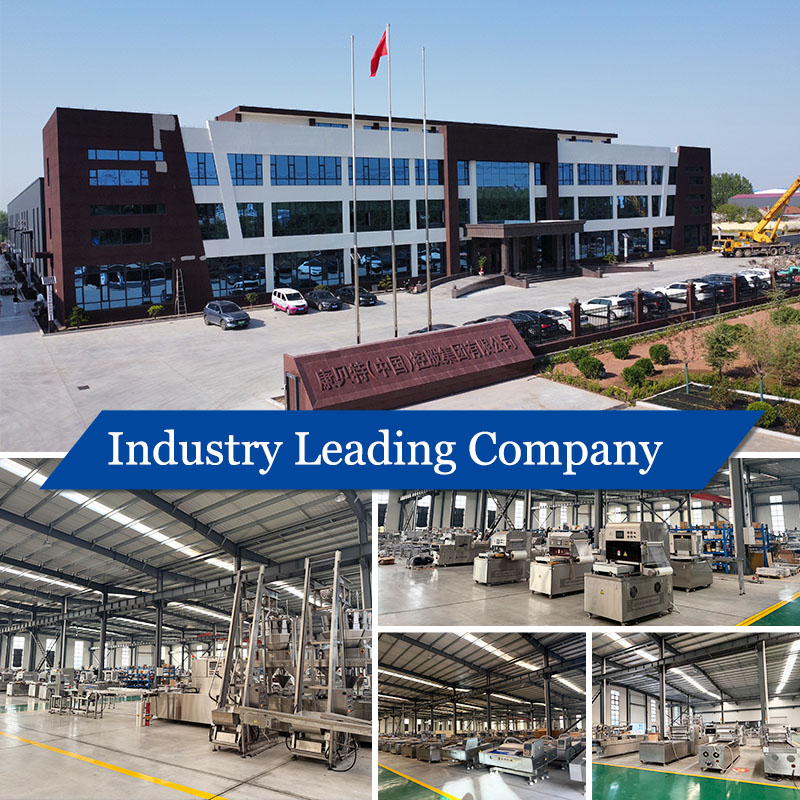
At KBT, we design and manufacture both thermoforming packaging machines and tray sealers (MAP tray sealers) in our 13,000 m² ISO 9001-certified facility in Shandong, China. Every machine undergoes a rigorous Factory Acceptance Test (FAT) before shipment, and our engineering team supports installations across 100+ countries.
Our DRZ Series Thermoforming Vacuum Packaging Machine offers:
- 5–10 cycles per minute with multi-cavity tooling
- German Busch vacuum pumps and Japanese Mitsubishi PLC
- SUS304 food-grade stainless steel construction with IP65 washdown design
- Compatibility with flexible films and rigid trays
- Custom tooling for any product shape — from steaks to industrial hardware
Our MAP Tray Sealer line delivers:
- Semi-automatic and fully automatic configurations
- Precise gas mixing for modified atmosphere packaging
- Quick-change sealing tools for multi-SKU operations
- Compact footprint for easy line integration
If you are still unsure which platform fits your operation, send us your product specifications, target output, and pack format. Our application engineers will run a side-by-side TCO analysis for your specific scenario — no obligation.
Conclusion
The thermoforming packaging machine vs tray sealer decision is not about which machine is “better” — it is about which machine matches your volume, product mix, and cost structure. Thermoformers dominate at high volume with stable formats, delivering lower material costs and higher throughput. Tray sealers excel at flexibility, lower upfront investment, and fast changeovers for multi-SKU operations.
Before you commit, run a 5-year TCO model with your actual volumes and labor costs. And if you need help with that analysis, the KBT team is one message away.
Ready to find the right packaging machine for your production line? Request a free consultation today and receive a customized TCO comparison for your products.